Survival Girls Interview, etc.

Dear Ones,

The Survival Girls are on the radio!  I have an interview up in a five-minute segment about the Survival Girls for WFIU, and samples of the girls singing are intermingled with the talking.  I still cry when I hear them sing.  They came up with that song in two days, and came up with the harmony on the spot in a dirty compound in a Nairobi slum. No recording device, no musical instruments, just their own incredible voices and heart and unity.  I miss them so, and admire them endlessly.  They have their own website!  They put it up fairly recently.  Here it is.

The USAID Frontiers in Development Essay Contest winners are officially announced here.  I’m blown away to be among them, and after stalking a few on google, I am astonished at their accomplishments, truly out of my depth, and very grateful.

Also, the Poetry Foundation wrote up my Huffington Post piece about the Summer Literary Seminars here.  A lovely thrill!

All joy and spring over here.  Hope it is there, too.

Ming

Posted in Uncategorized | Leave a comment

Frontiers in Development

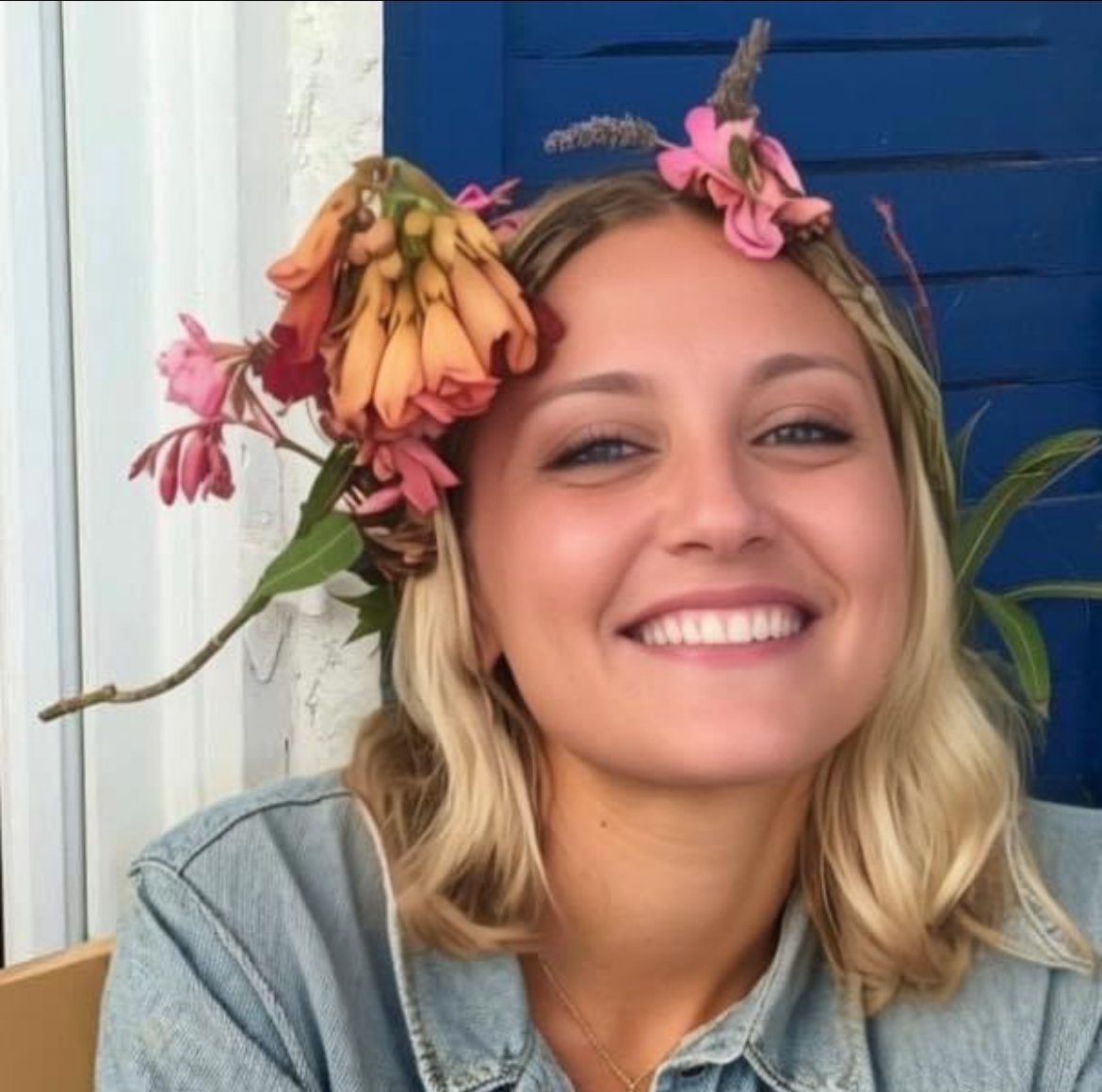
Official Press Release Photo, credit: Erika Lee, Indiana University Graduate School

Well, guys, here’s an official photo of me.  It goes along with the press release Indiana University’s Communications department published today about my receipt of the Herman Wells Graduate Fellowship, the “largest and most prestigious award” granted by the Graduate School to “students who demonstrate the qualities for which Chancellor Wells was renowned: leadership abilities, academic excellence, character, social consciousness, and generosity of spirit.”

There isn’t a more encouraging thing out there than the knowledge that it’s less and less what facts and figures and plans a person can produce, and more who they are and what they’re about that are invested in.  Similar to the Henry Luce Scholarship, this award was a vote of confidence by a group of people who decided that the personhood of someone is as worthy of investment as the specific thing they might go and achieve.  The sensation of receiving such a vote of confidence is priceless, it’s boundless, it’s endlessly buoying, and it’s what I would like to give to those in my community whose care and character warrant votes of support.  I came to graduate school afraid I had made the wrong choice, and afraid I didn’t quite fit, afraid I wouldn’t be able to pay down my loans.

I am not afraid anymore.

As if that weren’t enough of a boon (and a coup, as no one recalls a year when an MFA student won the Wells), the same week I learnt of this good fortune, more came down the pike.

Steve Radelet, USAID’s chief economist, wrote to me. My essay about the Survival Girls was one of five chosen in a worldwide contest held by USAID and Devex for inclusion a ‘Frontiers in Development’ publication.

Other contributors to the publication? Bill Gates, Admiral Stavridis, Paul Collier, and Indra Nooyi.

This is such a big deal that I have the impulse to use the Twitter hashtag #whatisthisidonteven.  The Wells was ridonkulous awesome.  This?  This is a comet.  This is a galaxy.  This is a similar vote of confidence, but from the most impressive heavies in the international development community.  The community I hope to call home, for the rest of my career; the community in which I hope my artist-hat will prove useful in providing a lens for looking at the important issues of our time.

It sounds pretty darn trite, but I genuinely can only endeavor to be worth the gifts I have been given: to care for my community wherever I am in the same spirit in which I was given this acknowledgement and this platform.  That the world wants to hear about the Survival Girls, about safe space and the power it gives to youth, is way more comforting than the myopic hope that I’ll pay off my student debt somehow: it’s the most substantial comfort there is.

My goal now?  To send the Survival Girls to college.

Anne-Marie Slaughter, my hero for many reasons, among them for being the first woman to hold the position of Policy Planning Director for the U.S. State Department, retweeted a post I wrote for Huffington Post about the Survival Girls back in October.  Something tells me that generous move of hers–which bodes well for the potential of social media sites like Twitter for “curators” like Slaughter to include diverse perspectives in heretofore slightly more insular conversations, like the one around foreign policy–set the stage for this “development.” (See what I did there?)  I’ll keep squawking as long as they let me sit at the big kids’ table, that’s for sure.  And even if that’s not for long, it’ll still be for longer than I ever dreamed possible.

Thank you, dear ones, for keeping me company on this journey.  It turns out there are so many wonderful minds and hearts out there, at all levels of government, all over the world.  It turns out things can shift for the better, and fast.  Now that it’s happened for me, I can’t wait to use any opportunity that may arise from this to turn around and do it for other people.

Ming

Posted in Uncategorized | Leave a comment

The New Activism

A word about…words. Specifically, the heavily saddening and angering words occupying headlines and constellations of hashtags in the twitterverse over the past few days: World Food Day, International Day to Eradicate Poverty, famine, refugees, the Horn of Africa, crisis. “Awareness” and “Activism” seem like heavy words these days, full of either rage or depression. But awareness is not just grief and statistics, which too often lead to an immobilizing depression of their own.

So, a word–or not a word so much as an image, an image of a victim of an atrocity in East Africa:

Meet Sitawa Wafula.
I first saw Sitawa this summer in a Nairobi nightclub, where she performed at an open mike to celebrate the release of the latest issue of Kwani?, Kenya’s first literary magazine. Sitawa stepped onto the stage and quietly adjusted her hair wrap before stopping the show with the announcement that she was a rape victim, and proceeding to recite a breathtaking poem about a woman’s sexual identity. I was in town through the UNHCR, mobilizing a the Survival Girls, a theater group for young Congolese refugee women, and just that day in our workshop my girls had started to talk about rape–about how even speaking of being raped, much less seeking medical help for it, was avoided at all costs by women across Africa, at the risk of being spurned by their families and deemed unfit for marriage. But here was an East African woman, not just admitting what happened, but relating the information publicly and without shame.

Sitawa slipped out before I could find her that night, so I asked the event emcee for her number and texted her an introduction of the Survival Girls. I asked whether she’d be willing to visit the girls during that Sunday’s workshop. “I’ll come with my adventure cap on. See you there babe,” she texted. Later we arranged over the phone to meet at Nakumatt, an upscale mall. “I just got hair, and it’s big. So I will be the girl with the biggest hair,” Sitawa laughed.

Sitawa’s hair wasn’t all that huge, but her earrings were–big teardrop-shaped beads that came down to her shoulders. It was Sunday, and she wore a frilly pink dress. We shared some chicken tikka. Sitawa had been raped on Sunday June 15th, eight years ago. “My project is called Sunday Fifteen for that reason,” she said between bites. “I go into schools and tell girls what to do if they are raped. Not to wash their clothes, not to shower, to go within 72 hours to the hospital. I also raise money for girls who are too poor to buy pads for their periods. They go through the trash to find others’ used pads or sit over a hole for the life of the period. Occasionally their family will forget that’s where they are and get angry that they haven’t done their chores, and the entire time they have missed school.”

I couldn’t believe the wonderful fortune of meeting Sitawa; she couldn’t have been a more perfect guest to a Survival Girls workshop. We headed to the slum of Kangemi, where the Survival Girls live, and into the community’s church compound. The pearly-eyed old man guarding the entrance nodded and gestured with his arm, indicating that the girls he knew I was looking for were already inside. In the sharp sunlit air we heard them and made our way toward the scraps of sound floating over the red tin roofs:…We love yoooou…Africa my motherland…we need you…

The girls had come up with that song the workshop previous as an introduction to their theater piece, which they created to address rape and the refugee experience of seeking asylum in a new country. Three girls entered from stage left, three from stage right. They stepped and swayed in unison with their arms outstretched toward each other, and when Sofia, the eldest Survival Girl, clapped once, they all dropped to their knees with a cry and Dianne began her monologue, bellowing about the rainfall of bullets.

They girls broke into smiles and waved when Sitawa and I rounded the corner. Sitawa introduced herself and the girls positioned a bench for us to sit on, explaining that the compound had no free rooms. After praising their Sunday-best church outfits I turned to Sitawa.

“Do you mind telling your story?” I asked her. “The girls have developed a piece that talks about some of the same topics. I thought then they could perform the piece in full for you.”

The girls settled onto the brick steps and perched on the edge of the bench. Sitawa began in her high voice, telling the story in English and sometimes Kiswahili.

She had been raped by someone who knew her, someone she trusted. Her boyfriend’s best friend. They were on their way to church together, walking the same route as usual. He gave her a soda with something in it, something that made her pass out. That was in the morning, and when she came to, she was naked, in a bed, and the clock said 4pm. She touched herself and there was substance on her. He was there, and he raped her again, and this time she was conscious.

When Sitawa reached this part of the story, her shoulders drooped. “After that,” she said, “for months I couldn’t…” she let out a breath. “I couldn’t do anything. I didn’t want to see anybody. I didn’t want to go anywhere.”

I stole a look at the girls’ faces. They were all looking at the ground, quiet, attentive, respectful. Some of them had been gang-raped by men they had seen hack to pieces their parents and brothers. The group became a theater project when the girls said they wanted to perform the words they wrote, and when I realized that the extent of their trauma made embodiment of text not just helpful but necessary for any real reduction of post-traumatic stress to begin within them, within selves orphaned, dislocated, soaked in shame and often rendered immobile with despair. This stasis of hopelessness seizes upon trauma victims through the release of calmatives fired by the brain stem, and it happens often to physically threatened and overpowered young women. If your nervous system judges you too small to “fight” and too slow to “flight”, you get “freeze”. A depression that is much more than conscious-mind deep, the motionless numb of a “freeze” indicates that your brain stem has judged you unable to escape and doused you with a calmative–literally, your body has prepared itself for injury. If the men who told your father that he had to rape you or die, and he refused, and you watched them slaughter him before they took you out back, gang-raped you, and left you to die, you’ll be in that choiceless void of remove for a very, very long time.

Sitawa finished her story and the girls thanked her. She and I took our seats on the bench and the girls assumed their places. It was their first time performing for anyone but me.

I played a monkey called Swift in the Ives short play “Words, Words, Words” in high school, and six of Bluebeard’s doomed wives in college. Observing the directors of those two plays was all I had to go on when Sofia turned to me during one of our first workshops and said, “Ming, we want you to correct us.”

I had been content simply to be the reason for the girls to get together, to get to know one another, and make some art unhindered by the neighborhood boys peeking through the windows of whichever compound room we could claim. Just sitting quietly in the corner while they conferred and practiced was the most important thing I could do for the girls, as far as I was concerned.

“Correct you?” I asked. “Do you mean, direct you?” I looked at Sofia; she and the other girls, who stood behind her, nodded.

I figured out the directing thing when I realized it was like editing creative writing, which involves mainly a sense of pitch and order. Something had to sound right, verbally and, as it turned out, spatially. Every time they ran through the piece, I took harried notes: “1) Palome look up. 2) Nana NEEDS to either look upset or just hide her face, not believable. 3) Valentine needs to block better. 4) Dianne come in sooner. 5) S & S, stop fidgeting! 6) transitions IN UNISON!”
Read More »

Posted in Uncategorized | Leave a comment

Good Developments (In More Ways Than One)

Dear Ones,

A great many exciting things have happened this fall! Not only did my nomination of Tumen Ulzei Bayunmend, an exiled dissident writer from China’s Inner Mongolia, secure him a prestigious Human Rights Watch Hellman/Hammett Grant, but I was just informed that “Odette”, my nonfiction piece about meeting a refugee sex worker in Nairobi, has been nominated for the AWP Intro Journal Award. I’ll keep my fingers crossed that it makes its way into a journal, but in the meantime, I am simply grateful that the literary mind of America wants to learn and engage with the difficulties and dissonances involved in international development work. It’s one way to involve a community of some of the most smart and sensitive people I know in an international conversation that only grows in importance each day.

My latest contribution to that conversation comes in the form of a Halloween-themed Huffington Post blog about refugees called “The Real Haunted House” and a thought or two about gender and development in my most recent Huffington Post piece, called “The Problem With Girls-Only“.

The more I look into the business, practice, and scope of advocacy-whether it’s refugee advocacy, dissident advocacy, women’s advocacy, or all three–the more encouraged I feel by the tremendous wave of attention and support these issues are getting within public discourse, especially through the internet. Whether it’s Angelina Jolie making us aware of the plight of displaced persons, George Clooney drumming up awareness about the crisis in Sudan, or folks out of the spotlight donating a few bucks to the UNHCR for a Blue Key, there’s a great deal more to the internet than idle web-surfing and more to Twitter than random pop-culture soundoffs. I mean, those are good too, but I, for one, was amazed when the incredible Ronan Farrow and Ann-Marie Slaughter retweeted my Huffington Post piece about the Survival Girls to a combined 18,000+ followers. Ronan Farrow currently serves as Special Adviser to the Secretary of State (that would be Hilary Clinton) for Global Youth Issues, and Anne-Marie Slaughter is a member of the “Foreign Policy Elite” who served as Director of Policy Planning for the U.S. Department of State from 2009-2011. (As if that weren’t impressive and badass enough, she was also the first woman to fill that position.)

I mean, I live in a basement in the Midwest and teach composition to 18-year-olds from rural Indiana. The idea that I could contribute to a conversation about development at the cyber-table with such astoundingly astute, informed, and active public servants continues to blow my mind in no uncertain terms. It also, as with the AWP Intro Award Nomination, gives me tremendous hope for the age we’re in. The inclusiveness and dynamic back-and-forth to be found between foreign policy experts in the Twitterverse, for example, is reason enough to feel hopeful, but that those experts would turn around and include some twenty-something with a ton of student debt and a bizarre CV in the mix for a minute did more than give me hope. Let’s face it, I was–and am–fucking thrilled.

Yours,
Ming

Posted in Uncategorized | Leave a comment

The Survival Girls

Dear Ones,

In a departure from my last Huffington Post piece, which dealt with teen suicide in sleepy Bloomington, my newest one deals with the incredible resilience and forward momentum I encountered in the young female Congolese refugees who constitute the Survival Girls, a theater group I mobilized this summer in a slum of Nairobi, Kenya.

There’s a lot of thinking to be done about youth empowerment today and the ways it affects government, social media, and development work–and how those things in turn also shape youth empowerment just as much as they are shaped by it. I figured I’d add my two cents, and I hope you enjoy. I haven’t immediately shared the majority of my Kenya manuscript because there was so much to digest, but this is the beginning of what-all I have to say about the Nairobi summer!

Yours,
Ming

Posted in Uncategorized | Leave a comment

My First Piece on Huffpo’s Culture Page

…is up here. Jon Stewart’s visit to IU, Snooki, suicide, and teaching composition are all involved. Needless to say, it covers some ground!
Grateful to know my newest batch of students, grateful for social critics, and continually grateful for the freedom to express my views on it all. Hope you enjoy it.

Posted in Uncategorized | Leave a comment

Human Rights Watch FTW!

I am honored to report that my nomination of exiled Chinese writer Tumenulzei Bayunmend to the Human Rights Watch Hellman/Hammett Grant was successful! Tumenulzei’s story was what I went to Istanbul in 2010 to tell, at the second-ever Writers and Literary Translators International Congress. He was granted passage to the USA within a year.

I’ve written extensively about the impact this man, who bought me pizza in that -45 iceworld and comforted me with warm lambchops and beer when I had a relationship break-up, has had on me. He was my friend and a comfort during the cold winter. I’m a Freedom of Expression advocate and he’s an exiled writer. More, though, I’m his American daughter and he’s my Mongolian dad.

Tumenulzei is how I fell backward into the refugee advocacy work I continued in Istanbul at that conference (and in Kenya this summer with Congolese refugee girls in the slum of Kangemi). During my year as a Henry Luce Scholar in Ulaanbaatar, Mongolia, I worked as the International Relations Advisor to the Mongolian Writers Union with the not-so-subtle aim of helping Mongolian Writers to work toward the formation of a Mongolia chapter of International PEN. PEN America’s Freedom to Write Program contacted me with the name and contact of this exiled writer who was in need of assistance. This guy and me, we could barely speak any of the same words. Turns out, we didn’t need to.

The Southern Mongolian Human Rights Information Center has a press release about Tumenuzei’s grant and his bio.

Posted in Uncategorized | Leave a comment

under the larches

Dear Ones,

A poem I wrote for a departed friend, “under the larches“, is up over at Ink Node, where the editors just notified me that it’s featured currently as the front page marquee poem! Very grateful that folks seem to like it.

I know I have long been silent on this site–Kenya was an incredible experience and I am working on a longer piece of writing about it as something of a self-challenge. Several outlets have asked me for pieces on the work I did there, and rest assured that when the writing is ready, it’ll go up, and you’ll be the first to know!

Thank you, as ever, for your support.

Ming

Posted in Uncategorized | Leave a comment

First Kenya Dispatch!

Up here at Huffington Post’s World Page.

More apace!

Gratitude,

Ming

Posted in Uncategorized | Leave a comment

Creative Writing With Refugees in Kenya!

I am officially Kenya-bound! Thanks to an International Enhancement Grant, I’ll be working with the amazing Michael Littig at the Great Globe Foundation, PEN Freedom to Write, the Summer Literary Seminars, the UNHCR Kenya, and other awesome orgs and peeps to bring creative writing workshops to young urban female refugees in Kenya this summer!

The grant is for the development and implementation of creative writing workshops for young urban female refugees in Kenya, the country home to the largest number of refugees in the world. The wonderful Mikhail Iossel, founding director of the Summer Literary Seminars, contacted me about possibly programming together last fall after he heard about my advocacy for exiled dissident Chinese writer Tumen Ulzei Bayunmend at the Writers and Literary Translators International Congress in Istanbul last September. This happened to be around the same time as my good friend Michael Littig, who was a Fulbright scholar in drama in Mongolia the year I was a Luce Scholar there, and I started talking on the phone about possible collaborative projects.

Since our time in Mongolia, Michael has gone and moved mountains with the miracle of his presence and dedication, creating the Great Globe Foundation (GGF), an organization that brings theater arts workshops to Dadaab–the largest refugee camp on the planet–and arts in general to disadvantaged youth around the world. I’ll be working in tandem with them, and with the UNHCR (the refugee arm of the UN that I’ve worked with since getting involved with freedom to write advocacy in Mongolia ’07) to get the program up and running. My long-term hope is to connect the girls and their work with Kenyan Literary Seminar faculty authors via mentorship programming. Before and after getting the news about my grant, directors at all of the above organizations have gotten back to me quickly with wonderful encouragement, support, and contacts, which means that a solid, sustained program for these girls beyond my summer tenure there is an actual possibility. I can’t think of a more important function of literature than to give voice to the voiceless, and I can’t think of a more voiceless demographic than young urban female refugees in Africa. They need to be given the mike, so to speak.

I am honored in advance to meet these young women and hear from them, and humbled and amazed at the opportunities my community continues to give me to do work in the arts for the international development sector. It’s a conversation I am thrilled to be part of.

Much more, very soon.

Love and thanks

Ming

Posted in Uncategorized | Leave a comment